When a manufacturing project requires accurate cuts, complex shapes and reliable results, choosing the right cutting method can make a major difference. Material type, thickness, design complexity, dimensional accuracy and production requirements all influence the best manufacturing process.
One technology that has become increasingly valuable across modern manufacturing is waterjet cutting.
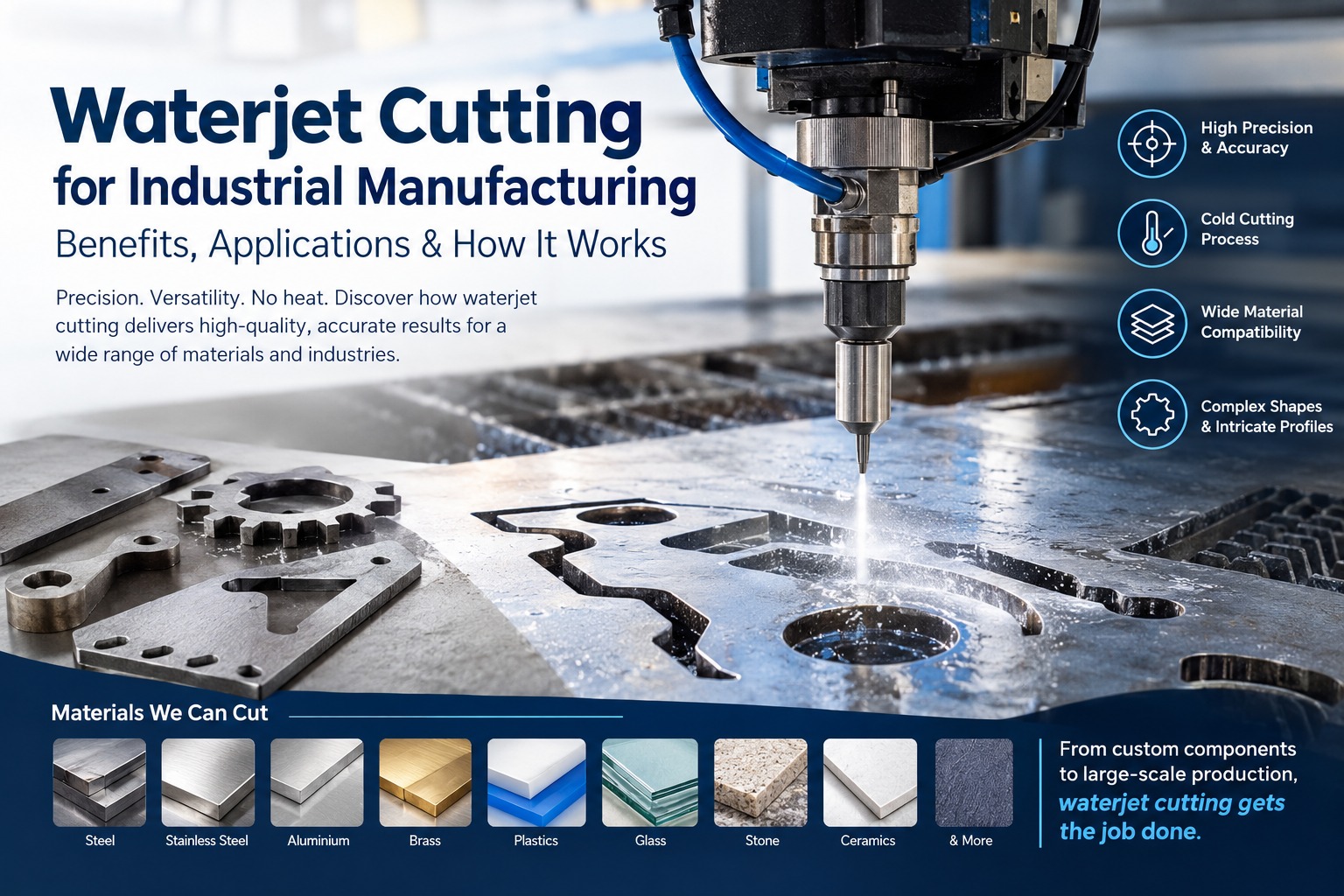
Unlike traditional thermal cutting methods, waterjet cutting uses a high-pressure stream of water, often combined with abrasive material, to cut through a wide range of materials. Because it is a cold-cutting process, it can produce precise components without creating the heat-affected zones associated with many thermal cutting methods.
But how does waterjet cutting work? What materials can it cut? And when should you choose precision waterjet cutting for your next project?
Let's explore everything you need to know.
What Is Waterjet Cutting?
Waterjet cutting is a precision manufacturing process that uses an extremely high-pressure stream of water to cut materials into specific shapes and dimensions.
For harder materials, an abrasive is added to the water stream to increase the cutting capability. The result is a highly controlled cutting process capable of producing intricate profiles, sharp corners and detailed components.
Modern CNC waterjet systems use computer-controlled technology to follow digital design files. This allows manufacturers to reproduce complex shapes accurately and consistently.
In simple terms:
CAD design → CNC programming → High-pressure waterjet cutting → Finished component
This process makes waterjet cutting particularly useful when a project requires a combination of precision, flexibility and material versatility.
How Does CNC Waterjet Cutting Work?
The process begins with a digital drawing or CAD file containing the dimensions and geometry of the required component.
1. Design and CAD Preparation
The component is first created or prepared as a digital drawing. Depending on the project, this may be supplied by the customer or developed using professional CAD design services.
2. CNC Programming
The digital design is converted into instructions that the CNC waterjet machine can understand. Toolpaths are planned to achieve the required profile while making efficient use of the material.
3. High-Pressure Cutting
A concentrated stream of water is directed through a small cutting nozzle. For harder materials, abrasive particles are introduced into the stream.
The cutting head then follows the programmed path to create the required shape.
4. Inspection and Finishing
After cutting, components can be cleaned, inspected and moved into additional manufacturing processes such as machining, fabrication or finishing.
This integrated approach can be particularly useful for projects requiring more than simple profile cutting.
Why Choose Precision Waterjet Cutting?
Not every manufacturing project requires the same cutting technology. However, waterjet cutting offers several important advantages for engineering and manufacturing applications.
1. No Heat-Affected Zone
One of the biggest advantages of waterjet cutting is that it is a cold-cutting process.
Traditional thermal cutting methods introduce significant heat into the material. Depending on the application, this can result in distortion, thermal changes or other material-related issues.
Because waterjet cutting does not rely on heat to remove material, it can help preserve the original properties of the workpiece.
For applications where thermal distortion needs to be minimised, this can be a significant advantage.
2. Complex Shapes and Intricate Profiles
Modern engineering projects often involve components that cannot be efficiently produced using basic cutting methods.
Waterjet technology can produce:
- Complex profiles
- Intricate shapes
- Sharp corners
- Internal cut-outs
- Custom components
- Detailed patterns
This makes custom waterjet cutting suitable for prototypes, replacement parts, engineering components and specialised manufacturing projects.
3. Wide Material Compatibility
Another major benefit of waterjet cutting is its versatility.
Depending on the equipment and application, waterjet technology can be used with materials including:
- Mild steel
- Stainless steel
- Aluminium
- Brass
- Plastics
- Acrylic
- Glass
- Ceramics
- Stone
- Tiles
- Rubber
- Foam
- Fibre-reinforced materials
This versatility means manufacturers do not necessarily need a different cutting technology for every material.
4. Accurate and Repeatable Results
CNC-controlled waterjet systems can follow precise digital toolpaths to produce consistent components.
This is particularly important when manufacturing multiple parts that need to match the original engineering design.
For production teams, consistency can help reduce rework, minimise material waste and improve the overall manufacturing workflow.
What Materials Can Waterjet Cutting Handle?
A common question is:
"What can a waterjet cutter cut?"
The answer is surprisingly broad.
Waterjet technology can be used across metals, composites, plastics and many non-metallic materials.
For example, stainless steel waterjet cutting can be useful for components requiring clean and accurate profiles. Aluminium can also be cut efficiently for custom engineering applications.
Waterjet cutting can also be used for materials such as glass, stone, ceramics, plastics, rubber and foam.
Blue Water Engineering states that its waterjet capabilities can cut materials up to 150 mm thick, with sheet sizes up to 4 metres by 2 metres, depending on the specific material and project requirements.
The exact cutting capability will depend on the material, thickness, geometry and required tolerances.
Where Is Waterjet Cutting Used?
Waterjet cutting is not limited to one industry.
Its combination of accuracy and material flexibility makes it suitable for a wide range of applications.
Engineering and Manufacturing
Engineering companies can use waterjet cutting to produce custom components, brackets, plates, profiles and prototypes.
Industrial Equipment
Manufacturers may use precision-cut components when building machinery, equipment and industrial assemblies.
Construction and Structural Applications
Waterjet cutting can produce custom plates, brackets and other components used in construction and structural projects.
Mining and Heavy Industry
Heavy industries often require durable components made from thick materials. Waterjet cutting can be useful when complex profiles are required without introducing heat into the material.
Maintenance and Replacement Parts
When an original component is damaged, obsolete or no longer available, a custom replacement can potentially be produced from an existing drawing, sample or reverse-engineered design.
This is where combining CAD design, waterjet cutting and machining can provide an efficient manufacturing solution.
Waterjet Cutting for Custom Components
Every engineering project is different.
Sometimes a standard off-the-shelf component simply will not meet the application's requirements.
A custom waterjet cutting service allows engineers and manufacturers to produce components based on specific dimensions and design requirements.
For example, a project may require:
- A unique plate profile
- Multiple internal holes
- A complex mounting bracket
- A replacement component
- A prototype
- A custom machine component
- A large-format profile
- A component made from an unusual material
Instead of changing the design to suit a standard component, the manufacturing process can be adapted to the engineering requirement.
Can Waterjet Cutting Be Combined With CNC Machining?
Yes.
In many engineering projects, waterjet cutting and CNC machining can complement each other.
Waterjet cutting can efficiently create the overall profile of a component, while CNC machining can then be used for features requiring additional precision.
For example:
CAD design → Waterjet cutting → CNC machining → Inspection → Finished component
Waterjet cutting may create the external profile, while machining can be used for features such as:
- Precision holes
- Threads
- Pockets
- Keyways
- Machined surfaces
- Controlled dimensions
This combination can reduce unnecessary machining while still achieving the required final specifications.
What Should You Consider Before Ordering Waterjet Cutting Services?
Before requesting a quote, providing complete project information can make the process much easier.
Material
Specify the material type and grade wherever possible.
Thickness
Material thickness can influence the cutting process, machine setup and expected result.
Dimensions
Provide accurate component dimensions and identify any critical measurements.
Tolerances
Clearly identify dimensions where tighter tolerances are required.
Quantity
Let the manufacturer know whether you need one prototype, a small batch or ongoing production quantities.
CAD Files or Drawings
Providing a suitable CAD file or engineering drawing can help the manufacturer understand the required geometry and specifications.
Finishing Requirements
If the component requires machining, welding, powder coating, galvanising or another finishing process, mention this at the quoting stage.
The more complete the information, the easier it is to determine the appropriate manufacturing workflow.
How to Choose a Waterjet Cutting Company in Australia
Choosing a waterjet cutting company in Australia should involve more than simply comparing prices.
Consider the company's:
- Experience: How long have they been working with waterjet technology and engineering projects?
- Equipment: Do they have suitable CNC cutting capabilities for your material and component size?
- Material knowledge: Can they work with the material you need?
- Engineering support: Can they assist with CAD drawings, design or reverse engineering if required?
- Additional manufacturing capabilities: Can they provide machining, fabrication or finishing when your project requires more than cutting?
- Quality control: Does the company have documented quality processes and appropriate certifications?
An integrated supplier can simplify communication by allowing multiple manufacturing processes to be managed through one engineering team.
Why Work With Blue Water Engineering?
Blue Water Engineering provides waterjet cutting, machining, fabrication and CAD services, allowing projects to move from design through to manufacturing under one roof.
The company has extensive experience in waterjet cutting and has operated its first waterjet machine since 1998. Its current capabilities include CNC waterjet cutting across a broad range of materials.
Its engineering capabilities also include 2D and 3D CAD design, reverse engineering, CNC machining, fabrication and welding.
For customers who require a complete manufacturing solution rather than cutting alone, having these capabilities available through one engineering provider can make project coordination more straightforward.
Frequently Asked Questions About Waterjet Cutting
What is waterjet cutting used for?
Waterjet cutting is used to produce accurate profiles and custom components from a wide variety of materials. It is commonly used for engineering, manufacturing, industrial, construction and specialised fabrication applications.
Is waterjet cutting better than laser cutting?
Neither technology is automatically better for every application. The best option depends on material type, thickness, geometry, tolerance and project requirements. Waterjet cutting is particularly useful when a cold-cutting process is preferred or when working with materials that may be difficult to process using thermal methods.
How thick can a waterjet cut?
Waterjet cutting capabilities vary according to the machine, material and application. Blue Water Engineering states that it can cut materials up to 150 mm thick, depending on requirements.
Does waterjet cutting create heat?
Waterjet cutting is a cold-cutting process, so it does not create the same heat-affected zone associated with thermal cutting methods.
Can waterjet cutting produce complex shapes?
Yes. CNC waterjet systems can produce intricate profiles, internal cut-outs, sharp corners and other complex geometries based on digital designs.
Can waterjet cutting be used for prototypes?
Yes. Waterjet cutting can be useful for prototypes and one-off custom components because designs can be programmed directly from digital files.
Can waterjet cutting and CNC machining be combined?
Yes. A component can be waterjet cut to create its main profile and then CNC machined for precision features such as holes, threads, pockets and machined surfaces.
What files are needed for a waterjet cutting quote?
A CAD file or engineering drawing is generally useful. It is also important to provide material type, thickness, quantity, dimensions, tolerances, finishing requirements and delivery information.
Final Thoughts: Is Waterjet Cutting Right for Your Project?
Choosing the right manufacturing process starts with understanding the component you need to produce.
If your project requires complex profiles, accurate dimensions, a wide range of material options and cold cutting, waterjet cutting may be an effective solution.
For more demanding components, waterjet cutting can also be combined with CNC machining, fabrication and CAD design to create a complete manufacturing workflow.
The key is not simply choosing the newest technology. It is choosing the manufacturing process that best matches your material, geometry, thickness, tolerance, quantity and final application.
If you are looking for reliable waterjet cutting services in Australia, Blue Water Engineering can help you assess your requirements and develop a practical manufacturing solution—from CAD design and waterjet cutting through to machining and fabrication. Contact us today to discuss your manufacturing requirements.