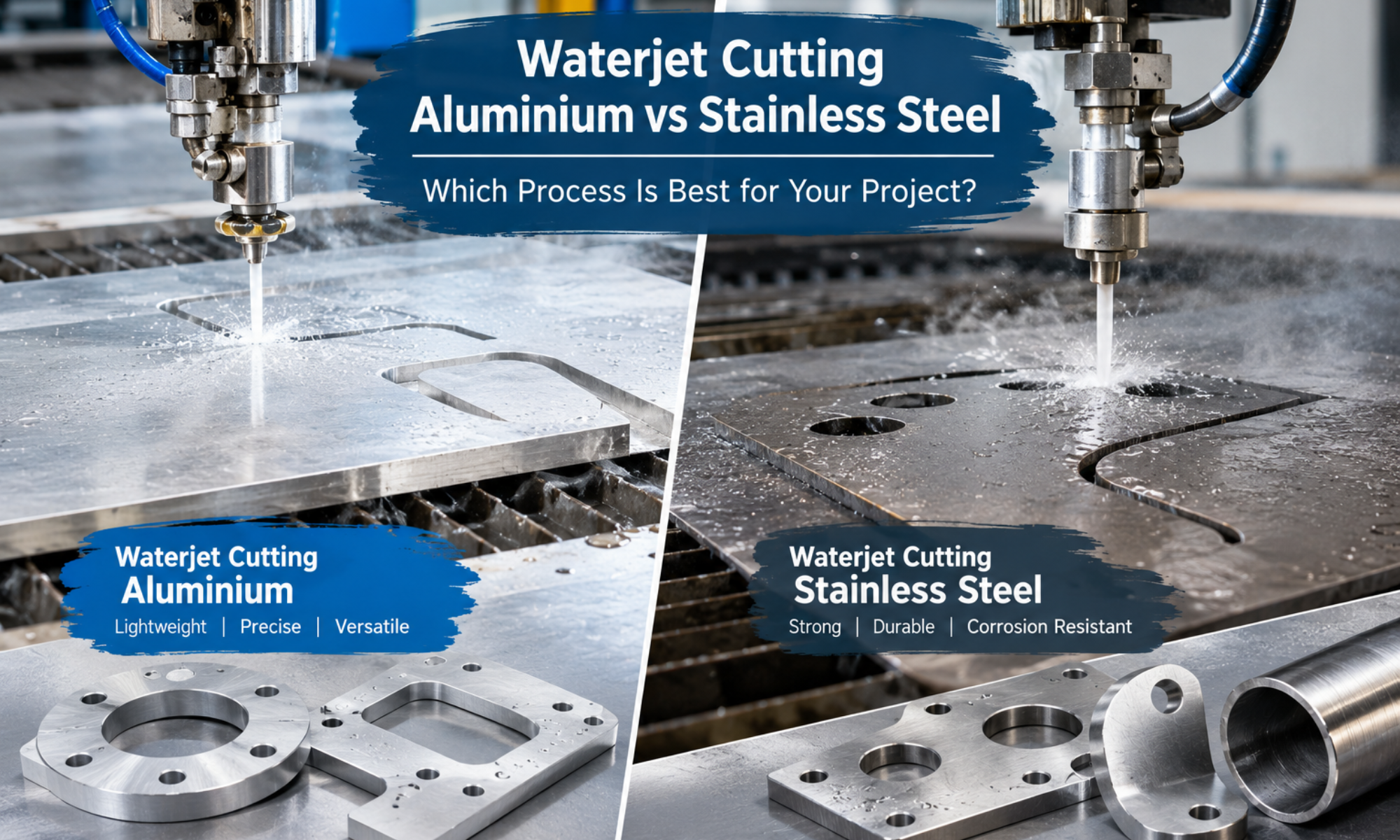
Choosing the Right Waterjet Cutting Process
When selecting a metal cutting method for an engineering or manufacturing project, material type, dimensional accuracy, edge quality and production requirements all matter.
Two commonly used materials in Australian manufacturing are aluminium and stainless steel. Both offer valuable properties, but they behave differently during fabrication. Aluminium is lightweight and easy to machine in many applications, while stainless steel is valued for its strength, durability and corrosion resistance.
So, what is the difference between waterjet cutting aluminium and waterjet cutting stainless steel, and which process is best for your project?
Waterjet cutting uses a high-pressure stream of water, often mixed with an abrasive such as garnet, to cut through material. Because the process does not rely on a conventional heat-based cutting method, it is particularly useful when managing heat-affected zones and preserving material properties are important.
The best option depends on the material grade, thickness, part geometry, required tolerances, surface finish, production volume and budget.
In this guide, we compare both materials, explain their advantages and limitations, and outline what to consider when choosing a waterjet cutting service in Australia.
What Is Waterjet Cutting?
Waterjet cutting is a precision manufacturing process that uses a concentrated, high-pressure water stream to cut materials.
For harder materials such as metals, an abrasive is typically introduced into the water stream to improve cutting capability. The cutting head follows a programmed path, allowing components to be produced according to a digital design.
Waterjet cutting can be used for a wide range of materials, including aluminium, stainless steel, mild steel, stone, glass and selected composite materials, subject to equipment capability and material requirements.
Why Use Waterjet Cutting for Metal?
Waterjet cutting offers several benefits for metal fabrication:
Minimal thermal impact: The process does not use a conventional heat source to melt the material, helping avoid the heat-affected zones associated with thermal cutting.
Material versatility: Suitable equipment can cut both aluminium and stainless steel.
Complex shapes: CNC-controlled cutting can produce detailed profiles, holes and intricate geometries.
Reduced thermal distortion: The absence of a conventional thermal cutting process can help minimise heat-related warping.
Design flexibility: Components can be cut from digital drawings, supporting custom manufacturing and prototyping.
However, final accuracy and edge quality depend on material thickness, machine capability, cutting speed, nozzle condition, abrasive settings and the required finish.
Waterjet Cutting Aluminium: Benefits and Applications
Aluminium is widely used in engineering and manufacturing because of its low weight, corrosion resistance and useful strength-to-weight ratio.
Waterjet cutting aluminium is suitable for projects that require accurately shaped aluminium components without the heat input associated with laser, plasma or oxy-fuel cutting.
Key Benefits of Waterjet Cutting Aluminium
1. Helps preserve material properties
Aluminium can be sensitive to heat during fabrication, depending on its alloy and temper. Because waterjet cutting is a non-thermal cutting process, it can help avoid heat-related changes near the cut edge.
This can be valuable when the component's material properties or dimensional stability are important.
2. Supports intricate designs
Waterjet cutting can produce detailed profiles, slots, openings and complex shapes from aluminium sheet or plate. This makes it useful for custom components and parts designed using CAD software.
3. Suitable for different aluminium thicknesses
Depending on machine capacity and the required finish, waterjet systems can process aluminium sheet and thicker plate. The practical cutting limit should always be confirmed with the service provider.
4. Reduces the need for heat-related correction
Since the process avoids conventional thermal cutting, it may reduce heat-related distortion and the need for corrective work. Mechanical finishing may still be necessary where tight tolerances or specific edge conditions are required.
Common Applications of Aluminium Waterjet Cutting
Aluminium waterjet cutting may be used for:
Engineering brackets and mounting plates
Lightweight machine components
Custom panels and covers
Transport and automotive components
Industrial enclosures
Architectural metal parts
Prototypes and custom fabrication projects
For example, a manufacturer producing lightweight equipment panels may choose waterjet cutting to create complex openings while avoiding the thermal effects of a heat-based cutting process.
What Should You Consider When Cutting Aluminium?
Aluminium grades vary in strength, hardness and machinability. The correct cutting settings depend on the alloy, thickness and design.
If your component has narrow slots, small holes or detailed internal features, discuss the minimum feature sizes and expected tolerances with your cutting provider before production.
Waterjet Cutting Stainless Steel: Benefits and Applications
Stainless steel is valued for its strength, durability and resistance to corrosion. It is commonly used in industrial equipment, food processing environments, infrastructure, commercial facilities and manufacturing.
Waterjet cutting stainless steel is useful when components need accurate profiles while minimising the thermal effects associated with conventional heat-based cutting methods.
Key Benefits of Waterjet Cutting Stainless Steel
1. Avoids a conventional heat-affected zone
Thermal cutting can introduce localised heating that may affect the cut edge or surrounding material. Waterjet cutting avoids conventional heat-based cutting, which can be beneficial for applications where thermal effects need to be controlled.
2. Supports complex component profiles
Stainless steel parts often require mounting holes, slots, curved edges and detailed outlines. CNC waterjet cutting can produce these shapes from programmed designs.
3. Works with suitable stainless steel grades and thicknesses
Waterjet systems can cut many stainless steel grades, subject to equipment specifications and material thickness. Confirm the exact grade and dimensions before requesting a quote.
4. Helps maintain material characteristics
Because the process does not rely on melting the material with a heat source, it can help preserve the surrounding material's original characteristics. This does not eliminate every possible source of distortion or surface change, so process suitability should be assessed for critical applications.
Common Applications of Stainless Steel Waterjet Cutting
Waterjet cutting stainless steel is commonly considered for:
Industrial machine components
Fabricated brackets and plates
Equipment panels
Food and beverage processing equipment parts
Architectural components
Manufacturing fixtures
Custom engineering parts
Industrial maintenance and replacement components
For example, an engineering company producing stainless steel mounting plates with multiple openings may use waterjet cutting to create the required profile without introducing conventional thermal cutting effects.
What Should You Consider When Cutting Stainless Steel?
Stainless steel grade, thickness and required edge quality influence the cutting approach.
Some projects may require additional deburring, surface finishing or dimensional inspection after cutting. If the part is intended for a hygienic, corrosive or visually sensitive environment, discuss its finishing requirements before production begins.
Waterjet Cutting Aluminium vs Stainless Steel: Key Differences
Although the same general cutting technology can be used for both materials, the material properties affect production planning and cutting performance.
Which material is faster to cut?
There is no universal answer. Cutting speed depends on the material grade, thickness, machine settings, abrasive flow, desired edge quality and geometry. A cutting provider should assess the actual component before estimating production time.
Is Waterjet Cutting Better Than Laser or Plasma Cutting?
Waterjet cutting is not automatically the best method for every metal component. The right process depends on the job.
Waterjet Cutting vs Laser Cutting
Laser cutting can provide high productivity for suitable materials and thicknesses, particularly for sheet-metal production. Waterjet cutting is worth considering when avoiding conventional thermal effects is important or when the material and geometry suit the process.
Waterjet Cutting vs Plasma Cutting
Plasma cutting is commonly used for conductive metals and can be productive for many fabrication tasks. However, it uses heat to cut the material. Waterjet cutting may be preferred when thermal impact and heat-related edge effects need to be minimised.
How Do You Choose?
Consider waterjet cutting when:
The component is sensitive to heat-related effects.
Complex profiles or detailed internal features are required.
The material or thickness is suitable for the available waterjet system.
The specified edge quality and tolerances can be achieved.
The total cost compares favourably with alternative processes.
For high-volume work, thin-sheet production or particular tolerances, laser cutting or another method may be more suitable. An engineering assessment can help identify the best process.
What Affects Waterjet Cutting Cost?
The cost of waterjet cutting aluminium or stainless steel varies from project to project. Material type alone does not determine the final price.
The main factors include:
1. Material thickness: Thicker material may require slower cutting speeds and more processing time.
2. Material grade: Different aluminium alloys and stainless steel grades can affect cutting parameters and overall processing requirements.
3. Design complexity: Intricate profiles, small holes and multiple internal cut-outs can increase cutting time.
4. Production quantity: Batch size, material nesting and setup requirements can influence the cost per component.
5. Edge quality and tolerance: Tighter tolerances or a specified edge finish may require additional process control or secondary finishing.
6. Material utilisation: Efficient nesting can reduce waste, depending on the component layout and sheet or plate dimensions.
7. Post-processing: Deburring, finishing, inspection and other secondary operations may add to the overall project cost.
To obtain a useful quote, provide a CAD drawing or suitable design file, material grade, thickness, quantity, required tolerances and finishing specifications.
How to Choose a Waterjet Cutting Service in Australia
Choosing a supplier involves more than comparing the quoted price.
For engineering and manufacturing projects, assess the provider's ability to understand your requirements and produce components to the specified design.
Before placing an order, ask:
Can you cut the specified aluminium alloy or stainless steel grade?
What material thicknesses can your equipment process?
What tolerances can you achieve for this component?
What edge quality should we expect?
Will secondary finishing be required?
Can you work from our CAD drawings?
What are the expected lead time and production quantities?
Can you identify potential design improvements before cutting?
Clear technical communication can help reduce rework, avoid misunderstandings and improve production planning.
Why Consider Bluewater Engineering for Waterjet Cutting?
For businesses seeking metal fabrication support in Australia, Bluewater Engineering provides a starting point for discussing project requirements and exploring its engineering services.
When evaluating waterjet cutting for aluminium or stainless steel, share your component drawings, material specifications, dimensions, quantities and finishing requirements. This information helps establish whether the proposed process is suitable for your project.
Visit the Bluewater Engineering website to explore the company's services and make an enquiry about your requirements.
The most appropriate cutting method should be selected based on the material, component design, tolerances, production volume and intended application—not simply on the name of the process.
Final Verdict: Which Is Best for Your Project?
Both waterjet cutting aluminium and waterjet cutting stainless steel can be effective options for precision metal fabrication.
Choose waterjet cutting aluminium when your project requires accurately cut aluminium components and benefits from the material's low weight, corrosion resistance or strength-to-weight ratio.
Choose waterjet cutting stainless steel when your component requires the properties of stainless steel, such as durability and corrosion resistance, combined with a suitable precision cutting process.
Waterjet cutting can be particularly valuable when avoiding conventional thermal cutting effects is a priority. However, cutting speed, edge quality, tolerances and cost should be evaluated against the actual material and design.
For the best result, provide your drawings and technical specifications to an experienced cutting provider and compare the available processes before production begins.
Frequently Asked Questions
1. What is waterjet cutting aluminium?
Waterjet cutting aluminium uses a high-pressure water stream, usually combined with an abrasive, to cut aluminium sheet or plate into specified shapes. It avoids conventional thermal cutting and can be suitable for intricate profiles, slots and custom engineering components.
2. What is waterjet cutting stainless steel used for?
Waterjet cutting stainless steel is used to produce components such as industrial plates, brackets, equipment panels, machine parts and custom fabricated components. It is useful when the design requires accurate profiles and avoiding conventional heat-based cutting effects is important.
3. Is waterjet cutting suitable for both aluminium and stainless steel?
Yes. Suitable abrasive waterjet systems can cut many aluminium alloys and stainless steel grades. The achievable thickness, cutting speed, accuracy and finish depend on the machine, material specification and component design.
4. Does waterjet cutting affect the properties of aluminium or stainless steel?
Waterjet cutting avoids the conventional heat input associated with laser or plasma cutting, helping minimise heat-affected zones. However, the final result still depends on the material, cutting parameters and application requirements.
5. Is waterjet cutting aluminium faster than stainless steel?
Not always. Cutting speed depends on material grade, thickness, machine capability, abrasive settings, cutting path and required edge quality. A supplier should assess the specific component to provide a realistic production estimate.
6. What thickness of aluminium or stainless steel can waterjet cutting handle?
The maximum practical thickness varies by machine and material. Cutting speed and edge quality may change as thickness increases. Confirm the equipment's capability with your supplier using the exact material grade and thickness.
7. Is waterjet cutting more accurate than laser cutting?
Neither process is universally more accurate. Accuracy depends on machine capability, material thickness, cutting parameters, part geometry and the tolerances required. Compare the achievable specifications for your component before choosing a process.
8. Is waterjet cutting stainless steel expensive?
The cost depends on material thickness, grade, cutting time, design complexity, order quantity and finishing requirements. Providing accurate drawings and specifications helps suppliers prepare a more relevant quote.
9. What files are needed for a waterjet cutting quote?
A CAD file or clear technical drawing is usually helpful. Include the material grade, thickness, quantity, dimensions, tolerances, edge-finish requirements and any critical features.
10. Where can I find waterjet cutting services in Australia?
Start by identifying your material and component requirements, then contact a provider that can assess the design and confirm its equipment capabilities. You can visit Bluewater Engineering to explore its engineering services and enquire about your project.